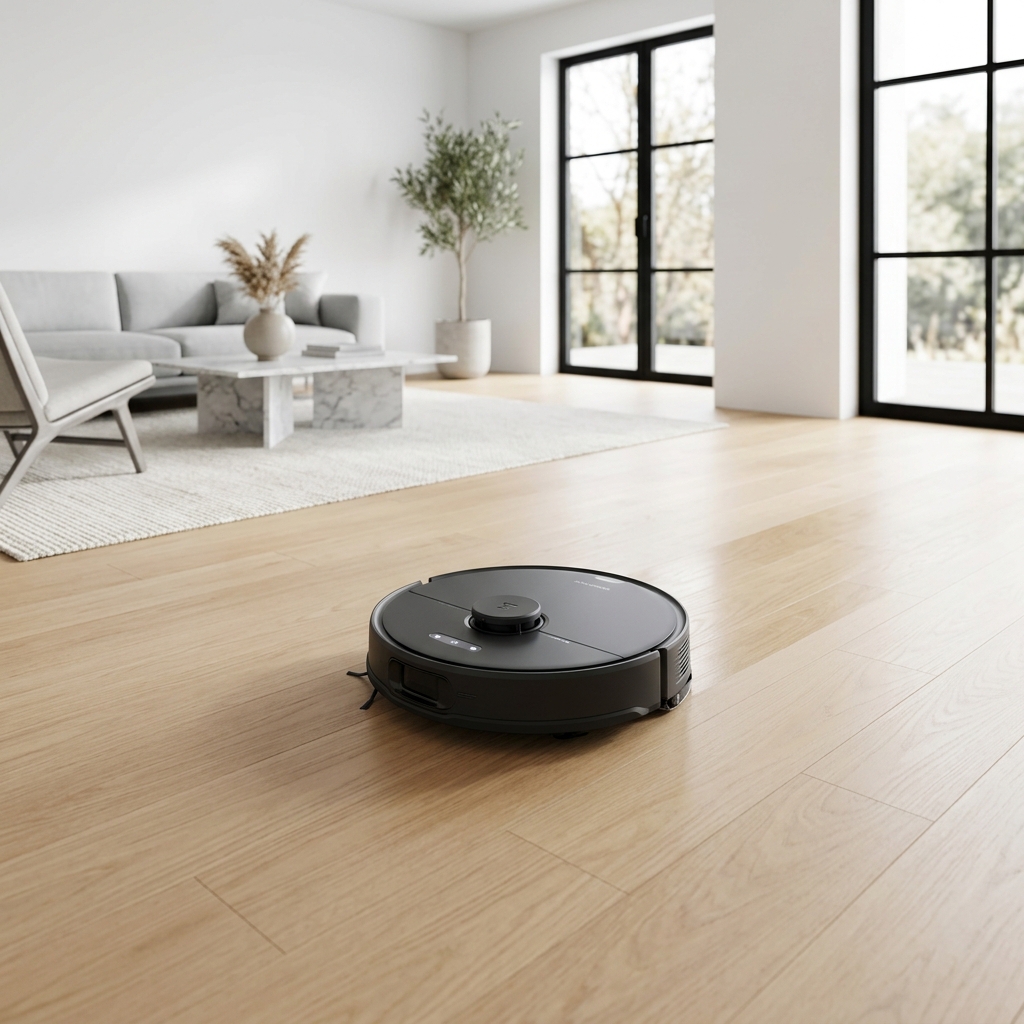
Robotic Vacuum Cleaner Reviews: Best Robot Vacuums Tested & Ranked
We independently test every major robot vacuum so you can find the right one for your home. Our hands-on reviews cover suction power, navigation accuracy, mopping performance, pet hair pickup, and real-world reliability.
✍️ By RVCR Editorial Team📅 Updated: May 19, 2026🤖 5 Vacuums Reviewed⏱️ 15 min read
Affiliate Disclosure: We may earn a commission on purchases made through our links at no extra cost to you. Our reviews are independent and unbiased.
Robot vacuums have transformed home cleaning. The best models can map your entire house, avoid obstacles, mop floors, and empty themselves — all without you lifting a finger. But with hundreds of models on the market, choosing the right one is overwhelming.
Our team has spent hundreds of hours testing robot vacuums across different floor types, home sizes, and use cases. This guide covers the 5 best robotic vacuum cleaners, with detailed pros, cons, specs, and honest verdicts to help you make the right choice.
Our Verdict: The Roborock Qrevo CurvX is our top pick. It delivers outstanding cleaning performance on all floor types, with a fully automated docking station that empties, washes, and dries — making it the most hands-off robot vacuum available.
Our Verdict: The Roomba j9+ remains the gold standard for pet owners. Its dual rubber extractors resist hair tangles better than any competitor, and its Dirt Detection system ensures heavily soiled areas get extra attention.
Our Verdict: If you want flagship-level features without the $1,000+ price tag, the Dreame L20 Ultra delivers. It rivals much more expensive models in day-to-day cleaning performance.
Our Verdict: The Saros 10R is the smartest robot vacuum available. Its Starsight system identifies and avoids cables, toys, and pet waste with remarkable accuracy — ideal for busy family homes.
Our Verdict: For renters or small apartments, the Eufy G30 is a solid, no-frills pick. You won't get smart mapping or auto-empty, but it cleans reliably for its price point.
A robotic vacuum cleaner is an autonomous floor-cleaning device that uses a combination of sensors, motors, and software to navigate your home and remove dirt, dust, and debris without manual operation. Understanding the basics helps you choose the right model for your needs.
Navigation & Mapping
Modern robot vacuums use one of three navigation methods. LiDAR (Light Detection and Ranging) is the gold standard — a spinning laser sensor builds a precise 2D map of your home, enabling the robot to clean in efficient, systematic rows. AI camera systems add real-time object recognition, identifying obstacles like cables and pet toys before colliding with them. Random-bounce navigation, found only in budget models, relies on bumping into walls and redirecting — less efficient but adequate for small, simple spaces.
Suction & Brush Systems
The cleaning head consists of a main rolling brush (or rubber extractor), side brushes that sweep debris inward from edges and corners, and a powerful motor that generates suction measured in Pascals (Pa). Higher Pa doesn't always mean better cleaning — brush design and airflow efficiency matter just as much. Models with anti-tangle rubber extractors, like the Roomba j9+, handle pet hair and long hair far more effectively than bristle brushes.
Charging & Battery Life
All robot vacuums return automatically to their docking station to recharge when the battery runs low. Premium models support "recharge and resume" — they pause, recharge, then pick up exactly where they left off, essential for large homes over 1,500 sq ft. Battery life ranges from 60 minutes in budget models to 180 minutes in premium robots.
Self-Emptying & Self-Cleaning Docks
A standard docking station simply charges the robot. A self-emptying dock goes further — it uses suction to transfer debris from the robot's onboard bin into a sealed bag in the base, letting you go weeks without emptying anything manually. The most advanced docking stations also wash mop pads with hot water, dry them with warm air, and refill the robot's water tank — making the entire cleaning cycle completely hands-free.
Not all robot vacuums are equally suited to every floor surface. Your home's flooring is one of the most important factors in choosing the right robotic vacuum cleaner.
Hardwood & Laminate Floors
Hard floors are where robot vacuums excel. Models with soft-roller brushes pick up fine dust and debris without scratching. For hardwood, Roborock and Ecovacs hybrids with mopping give you a complete clean in one pass. Avoid models with stiff bristle brushes that can scatter fine debris.
Low to Medium Pile Carpet
Most mid-range and premium robot vacuums handle low-to-medium pile carpet well. Look for suction above 5,000 Pa and a rubber extractor brush. Models with automatic suction boost when crossing carpet (like Roborock models) provide noticeably better results on rugs.
High-Pile & Plush Carpet
Thick carpet is a challenge for most robots. You need high suction (10,000+ Pa) and a strong motor. The Dreame X60 Max Ultra's 35,000 Pa power handles plush carpet better than almost any competitor. Note that some robots struggle to transition from hard floors to thick rugs without getting stuck.
Tile & Stone Floors
Tile benefits most from robot vacuums with mopping. Grout lines trap debris that vacuuming alone can't remove — a hybrid robot vacuum with a pressurized rotating mop or cylindrical roller (like the Ecovacs X8 Pro Omni) scrubs grout effectively. Auto-dry functions prevent moisture sitting on stone surfaces.
Mixed Flooring (Most Homes)
Homes with a combination of hard floors and rugs need a robot with automatic carpet detection and mop auto-lift. This feature raises the mop pad when the robot crosses onto carpet, preventing soaking. The Roborock Qrevo CurvX handles this flawlessly — a key reason it's our top pick.
Some robots with optical cliff sensors misidentify very dark floors as drop-offs, causing them to stop or avoid these areas. If you have dark hardwood, check that the model uses multi-sensor cliff detection that accounts for surface color, which newer Roborock and Dreame models do reliably.
🐾 Best Robot Vacuums for Pet Hair: What Pet Owners Need to Know
If you have cats, dogs, or any shedding animal, pet hair is your biggest cleaning challenge. Standard robot vacuums can struggle with fur — it wraps around brushes, clogs filters, and reduces suction. Here's what separates the best robot vacuums for pet hair from the rest:
Anti-Tangle Brush Design
The most important feature for pet owners is an anti-tangle brush system. Traditional bristle brushes collect hair like a magnet — it wraps around the axle and must be cut away manually every few days. Rubber extractor brushes (used by iRobot Roomba) and "Duo Divide" split-roller designs (Roborock) resist hair wrap significantly. Look for this feature above all else if you have long-haired pets or long human hair in your household.
Self-Emptying for Pet Homes
Homes with pets fill dustbins faster. A standard robot vacuum dustbin (around 400–600ml) may fill up mid-clean if you have heavy shedders. A self-emptying dock is almost essential for pet owners — the robot empties itself after every run, and the large sealed bag in the dock holds 30–60 days of debris. This also reduces the allergens you're exposed to since you're handling compressed fur far less frequently.
HEPA-Standard Filtration
Pet dander is a major allergen. A robot vacuum with a HEPA-style filter traps particles as small as 0.3 microns, preventing them from being recirculated into your air. If you or a family member has pet allergies, this filter specification is non-negotiable. Check the filter replacement schedule too — most need replacing every 2–3 months in pet homes.
Our Top Recommendations for Pet Owners
iRobot Roomba j9+ — Best rubber extractor system, Dirt Detection, and reliable pet hair pickup on carpet.
Dreame L40 Ultra — Strong AI obstacle avoidance avoids pet waste; excellent anti-tangle performance.
Roborock Qrevo CurvX — Dual anti-tangle brush, self-emptying, and the best all-around option for homes with both pets and mixed flooring.
🛠️ Robot Vacuum Maintenance: How to Keep Your Robot Running Like New
Even the best robotic vacuum cleaner requires some basic maintenance to stay at peak performance. Skipping routine upkeep is the number one reason robot vacuums lose suction or navigation accuracy over time. Here's what to do and how often:
Every Run: Empty the Dustbin
Unless you have a self-emptying dock, empty the onboard dustbin after every single cleaning session. A full bin reduces suction significantly and can cause the robot to scatter debris rather than collect it.
Weekly: Clean the Sensors
Wipe the cliff sensors (underneath) and navigation camera (top or front) with a dry microfiber cloth. Dusty sensors cause navigation errors, missed spots, or the robot treating dark rugs as drop-offs.
Every 2–4 Weeks: Check the Brush Roll
Remove the main brush and clear any hair or string wrapped around it. Even anti-tangle models accumulate some debris at the brush ends. Most models include a small cleaning tool for this purpose.
Monthly: Clean the Side Brushes
Side brushes collect hair and debris too. Remove them (they usually pop off easily) and clear the bristles. Replace bent or worn side brushes — they're inexpensive and critical for edge cleaning performance.
Every 2–3 Months: Replace the Filter
HEPA-style filters clog progressively, reducing suction even if the dustbin is empty. Tap the filter gently to dislodge loose dust (do this outside), but replace it fully every 2–3 months in average use, or monthly in pet homes.
Every 6–12 Months: Replace Brushes
Main brush rolls wear down with use, especially on carpet. Replacement brush kits are widely available from manufacturers and third parties for $15–$40, and they restore suction performance noticeably when the old brush is worn.
The short answer: yes — for most households, a robot vacuum is absolutely worth it. Here's a balanced look at what you gain and what limitations you should still be aware of:
Why Robot Vacuums Are Worth Buying
Time savings: A robot vacuum running daily keeps your floors consistently clean with zero effort on your part. Over a year, this saves dozens of hours of manual vacuuming.
Consistent cleaning: Robots clean every day (or on your schedule), preventing the buildup of dust, pet hair, and allergens between manual vacuum sessions.
Hands-free convenience: Schedule it to run while you're at work, during dinner, or overnight. The best models complete an entire home clean without any input from you.
Better for allergies: Daily robot vacuuming dramatically reduces dust mite populations and airborne allergens — a proven benefit for allergy and asthma sufferers.
Complements deep cleaning: A robot vacuum doing daily maintenance means your manual deep cleans need to happen far less frequently — perhaps once a month instead of weekly.
Honest Limitations to Know
Stairs: No robot vacuum can currently clean stairs. You'll still need a handheld or stick vacuum for staircases.
Deep carpet cleaning: Robot vacuums handle surface-level carpet well but cannot replace a deep-cleaning upright vacuum for embedded dirt in thick carpet. Use both for best results.
Cluttered floors: Robots need a reasonably tidy floor to operate effectively. If your floors are frequently covered in items, you'll spend time picking up before each run — reducing the convenience factor.
Initial setup time: Most LiDAR models require one or two mapping runs to learn your home properly. Budget 30–60 minutes for initial configuration and zone setup.
Bottom Line: If your household spends 30+ minutes per week vacuuming, a robot vacuum will pay for itself in saved time within 6–12 months. For pet owners and allergy sufferers, the health benefits make the investment even clearer.
Our top pick is the Roborock Qrevo CurvX. It offers 22,000 Pa suction, excellent LiDAR navigation, and a fully automated dock that self-empties, washes mops with hot water, and air-dries them — making it the most complete robot vacuum on the market.
Yes! Models like the iRobot Roomba j9+ are specifically designed for pet hair with dual rubber extractors that resist tangling. For homes with heavy shedding, look for anti-tangle brush systems and high-frequency cleaning schedules.
The sweet spot for most households is $400–$800. In this range, you get LiDAR navigation, good suction, and often self-emptying capabilities. Budget picks under $300 work for simple layouts, while $1,000+ models add premium obstacle avoidance and advanced mopping.
Yes, most modern robot vacuums work on low-to-medium pile carpet. High suction models (6,000+ Pa) perform best. iRobot Roomba models are especially praised for carpet performance due to their rubber extractor brush design.
A self-emptying robot vacuum has a docking station with a built-in dustbin that automatically sucks the dirt from the robot's bin after each clean. This means you only need to empty the dock bag every 30–60 days instead of after every run.
LiDAR is the industry standard for precise room mapping and systematic cleaning. AI camera navigation (used in top Roborock and Dreame models) adds real-time obstacle recognition. The best models combine both technologies.
Many modern robot vacuums include a mopping feature with a water tank and pad. Premium models like the Roborock Qrevo CurvX automatically lift the mop on carpet and wash the mop pads at the dock. For dedicated mopping, look for models with rotating scrubbing pads.
🏆 Final Verdict
The best robotic vacuum cleaner for most people is the Roborock Qrevo CurvX. It delivers best-in-class suction, reliable LiDAR mapping, and a fully automated dock — making home cleaning genuinely effortless.
If pet hair is your priority, the iRobot Roomba j9+ remains unmatched. On a tighter budget, the Dreame L20 Ultra offers remarkable performance for its price.
Whatever your home size, floor type, or budget, there is a robot vacuum that fits your needs. Use our comparison table and buying guide above to narrow down your choice — and check back regularly as we update our reviews with the latest models.